-
INVICTA Group Services
chevron_left Backclose
INVICTA Group Services
- INVICTA Group
- INVICTA Clinics
- Medical Laboratories
- Fertility Bank
-
Anti-Aging Clinic
- R&D Centre
- NAMI
Update date: 27 May 2026
Publish date: 21 May 2026
Read in: 14 min

Diabetic foot is one of the most serious complications of diabetes and may begin subtly—even with a minor cut or abrasion. Patients may remain unaware for a long time that something is wrong with their foot. Learn how to recognize the early symptoms of diabetic foot syndrome, what treatment involves, and what to do to protect yourself against the development of the condition.
Table of Contents
Type 2 diabetes is a lifestyle disease whose development is strongly associated with modern lifestyle factors: low physical activity, sedentary work, obesity, stress, and easy access to highly processed foods. According to the IDF Diabetes Atlas 2025, the leading international source of data on diabetes, approximately 589 million adults aged 20–79 are now living with the disease, meaning 1 in 9 adults worldwide. The same source reports that in Poland, around 3.1 million adults had diabetes in 2024, with forecasts indicating 3.3 million by 2050. It is estimated that diabetic foot ulcers develop in approximately 19–34% of people with diabetes.
Diabetic foot, or diabetic foot syndrome, is one of the most common and most serious complications of long-term or poorly controlled diabetes.
In its latest 2023 definition, the International Working Group on the Diabetic Foot (IWGDF) explains that it is a disease of the foot occurring in a person with current or previously diagnosed diabetes, involving at least one of the following:
The condition is also associated with the term diabetic toe. This is a colloquial term for changes that appear on the toe of a patient with diabetes. Diabetic toe is most often part of diabetic foot syndrome.
The development of diabetic foot is mainly driven by two mechanisms:
Hyperglycemia associated with diabetes, meaning excessively high blood glucose levels, damages the nerves and blood vessels in the lower limbs.
As a result, the patient has reduced sensitivity to pain or temperature changes, making it easy to overlook an abrasion, cut, or another wound—even a serious one. Impaired blood supply, in turn, means that the tissues receive poorer nourishment, so wounds heal more slowly and are more prone to infection.
Neuropathy also affects the skin itself, making it dry and more likely to crack. Over time, the shape of the foot may also change, leading to deformities.

The most commonly distinguished types include:
One of the best-known and simplest classifications is the Wagner classification, which primarily assesses the depth of the wound and the presence of necrosis or gangrene.
| GRADE | DESCRIPTION |
|---|---|
| 0 | No open wound, but the foot is at risk, for example due to deformities or calluses |
| 1 | Superficial ulceration |
| 2 | Deeper ulceration, extending, for example, to the tendons or deeper tissues |
| 3 | Deep ulceration with infection, abscess, or bone involvement |
| 4 | Localized gangrene, for example of a toe or part of the forefoot |
| 5 | Extensive gangrene of the entire foot |
At the INVICTA Anti-Aging Clinic, we treat grades 0–2 of the condition. Grades 3–5 require hospital treatment.
The early stages of diabetic foot may be subtle. The condition can begin even with something as minor as a corn, a small cut, or an ingrown toenail.
Early symptoms of diabetic foot include:
Symptoms of diabetic foot that may appear in later stages of the condition include:
The earlier you start treatment, the greater the chance of returning to full mobility.
The condition does not develop overnight. It is a gradual process in which several health problems overlap and compound one another.
The condition may begin, for example, with:
In a healthy person, the body quickly copes with such problems. Injuries heal efficiently, and the patient is aware of them. A person with diabetes may not realize that they have sustained a wound requiring care, while impaired circulation means that even a small cut heals more slowly and is more likely to become infected.
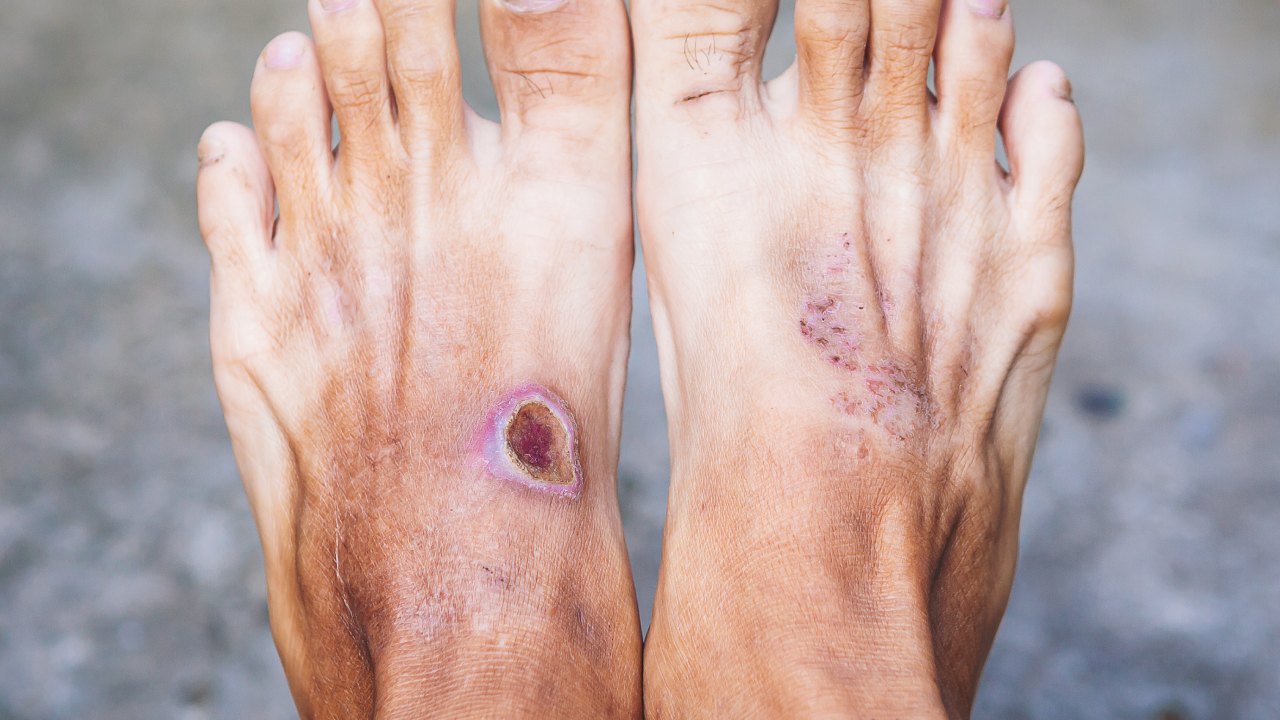
A deep wound with spreading infection and poor blood supply may cause the tissues to start dying. At a very advanced stage, necrosis, gangrene, or bone infection may develop and, in the most severe cases, may lead to amputation.
If you have diabetes and have noticed concerning symptoms, start by seeing your GP or diabetologist. Do not delay the consultation—schedule it as soon as possible. The specialist will assess your condition and outline the next steps.
The treatment of diabetic foot syndrome depends, among other factors, on the stage of the disease and which problem is most prominent. In most cases, however, the patient should work not with just one specialist, but with a whole team, including a diabetologist, vascular surgeon, podiatrist, nurse, and orthopaedic specialist.
Treatment primarily includes:
If walking puts pressure on the wound and worsens its condition, special dressings, insoles, offloading footwear, orthoses, or other solutions recommended by a specialist are used. If dead tissue, pus, or other signs of infection are present in the wound, the doctor may decide to clean it, collect a sample for microbiological testing, and start antibiotic therapy.
In the case of circulatory disorders, a vascular consultation and treatment to improve blood flow in the limb may be necessary. In more advanced stages, especially in the presence of necrosis, gangrene, deep infection, or suspected bone infection, surgical treatment may prove appropriate.
It is very important that a patient with diabetes does not attempt to treat wounds on their own. Calluses should not be removed independently, blisters should not be punctured, and random ointments should not be used without medical advice. The absence of pain may encourage patients to underestimate injuries, but any wound that is difficult to heal, ulceration, oozing discharge, pus, unpleasant odor, increasing swelling, redness, bluish discoloration, or blackening of the skin should be consulted with a doctor as soon as possible.
The review “Diabetic Foot Ulcers: A Review,” published in the prestigious Journal of the American Medical Association, reports that approximately 30–40% of diabetic foot ulcers heal within 12 weeks. Prognosis depends primarily on how advanced the problem is—how early it was diagnosed, whether the wound has become infected, whether the limb has adequate blood supply, and whether diabetes is well controlled.
It should also be remembered that the condition is a complication of a chronic disease. Therefore, even if a patient succeeds in healing the visible wound, they may still struggle with nerve damage, circulatory disorders, deformities, or an increased tendency to sustain further injuries.
The risk of recurrence is generally high. The same review states that the risk of recurrence is approximately 42% after one year and 65% after five years.
Discover the Medical Metabolic Treatment at NAMI Clinic and Medical Resort
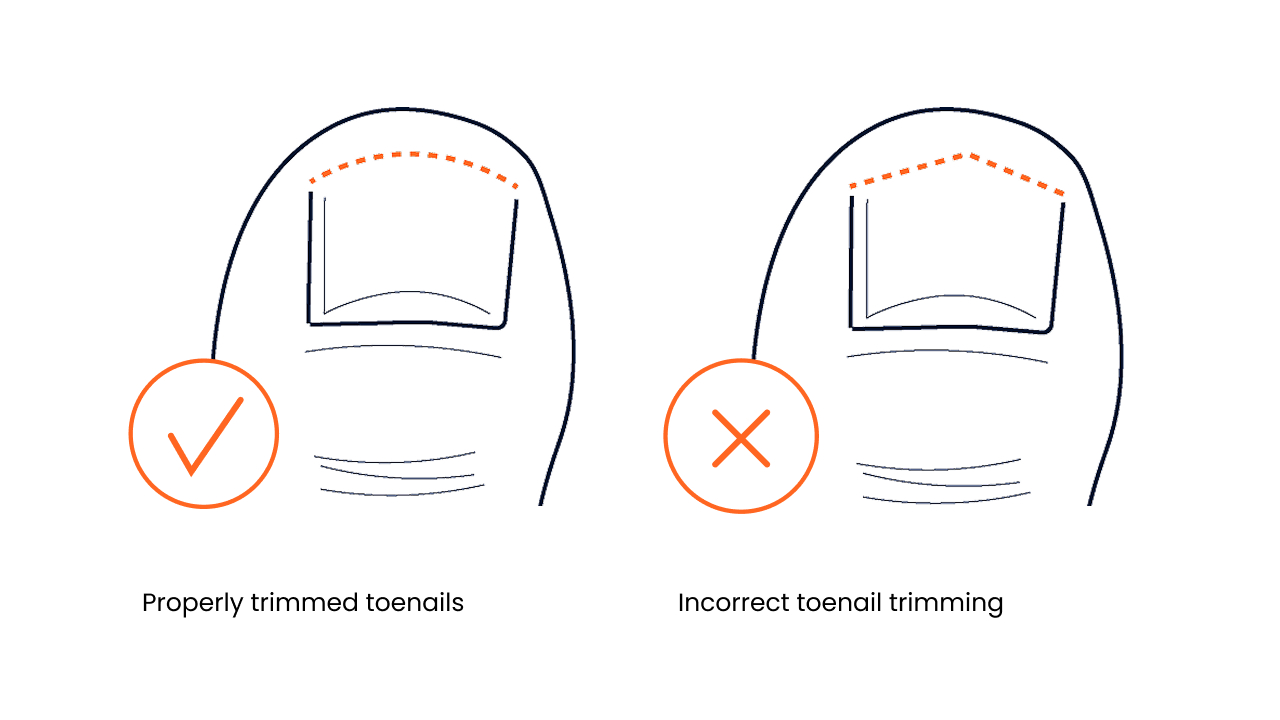
Principles of diabetic foot syndrome prevention:
Regular podiatry consultations help prevent foot conditions and provide the best care for your feet.
The appearance of diabetic foot depends, among other factors, on the stage of the changes. At first, they usually do not resemble a serious disease. Dry, flaky, or cracked skin is characteristic, with visible calluses, corns, or areas of thickened skin. Blisters, abrasions, ingrown toenails, fungal infection between the toes, or small wounds that are difficult to heal may appear. The limb may be pale or bluish, or, on the contrary, red.
At a more advanced stage, difficult-to-heal wounds and ulcers are visible. These most often appear on the sole, under the big toe, on the toes, on the heel, or in areas exposed to pressure from footwear. The wounds may be moist, oozing, covered with a yellowish coating, with discharge or pus. The skin around the wound may be swollen or red.
If necrosis or gangrene develops, areas of the skin, a toe, or a larger part of the limb become dark, bluish, brown, or black.
Diabetic foot may or may not be painful. Even in the absence of pain, changes requiring specialist intervention may develop. Nerve damage can cause reduced or lost sensation—hence the absence of pain.
Amputation is considered only when the affected tissues cannot be saved or when further spread of the infection threatens the patient’s life. It may be necessary, among other cases, in extensive necrosis, gangrene, severe infection, sepsis, or critical ischemia.


Poczytaj więcej