-
INVICTA Group Services
chevron_left Backclose
INVICTA Group Services
- INVICTA Group
- INVICTA Clinics
- Medical Laboratories
- Fertility Bank
-
Anti-Aging Clinic
- R&D Centre
- Nami
Update date: 27 January 2026
Publish date: 19 January 2026
Read in: 9 min
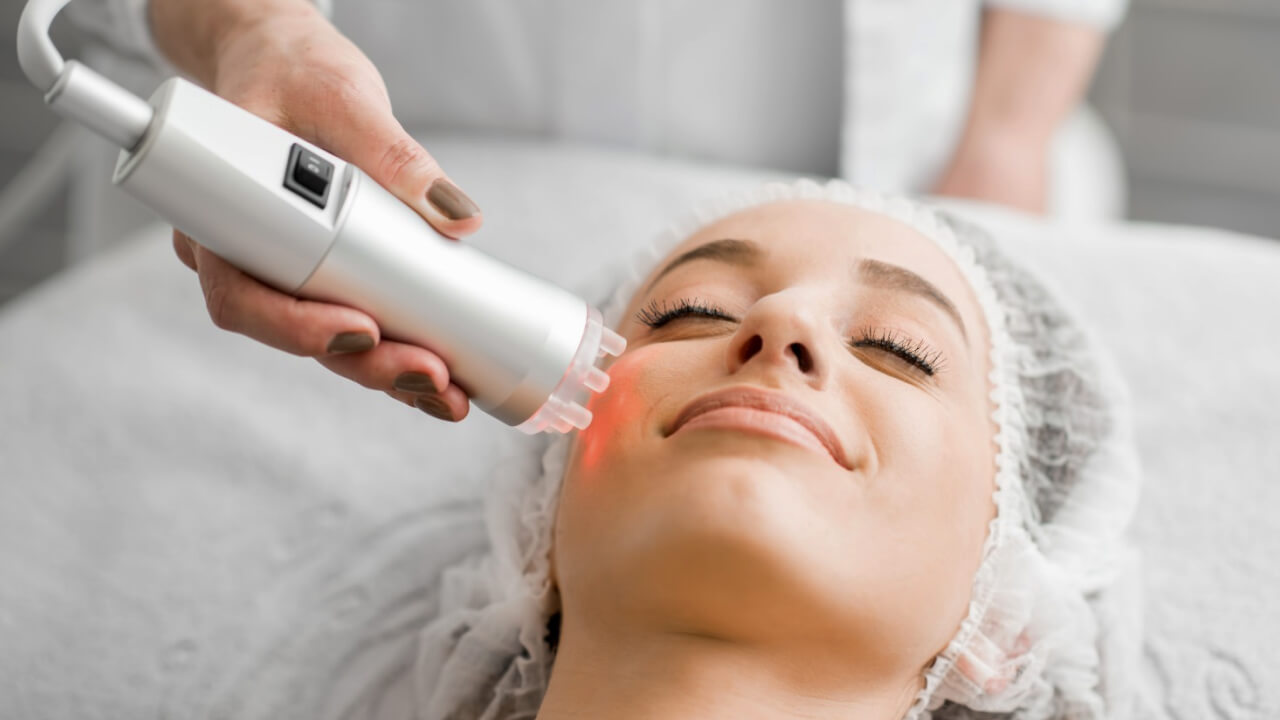
Modern cosmetology and aesthetic medicine increasingly rely on laser technologies, which make it possible to act on the skin in a precise and controlled manner. Thanks to different wavelengths and mechanisms of action, lasers allow, among other things, the reduction of discolorations, the removal of hair and tattoos, the shallowing of scars, and the improvement of skin texture and tone—often in areas where traditional skincare and treatment methods prove insufficient. In practice, however, there is no such thing as “one laser for everything”—the effectiveness of therapy depends on the type of device, its parameters, the indications for the procedure, and the experience of the specialist. Which types of lasers are most commonly used, and how do they differ from one another? Read the article and learn more.
Table of contents
Ablative and non-ablative fractional lasers differ primarily in the depth and intensity of their action on the skin.
An ablative laser removes microscopic fragments of the epidermis, creating controlled damage that strongly stimulates regenerative processes and collagen remodeling. It provides pronounced results in reducing deeper wrinkles, scars, or advanced structural changes; however, it is associated with a longer recovery period.
A non-ablative laser acts in the deeper layers of the skin without disrupting the epidermis—it heats the tissues and stimulates collagen production in a less invasive manner. The effects appear gradually, and the return to everyday activities is shorter.
At the INVICTA Anti-Aging Clinic, we use various types of lasers. The CO₂ laser works ablatively, interfering with the surface of the skin, whereas diode, Nd:YAG, and CPL lasers affect the skin without compromising its continuity. The choice of a specific technology depends on medical indications, the condition of the skin, and the expected therapeutic outcome.
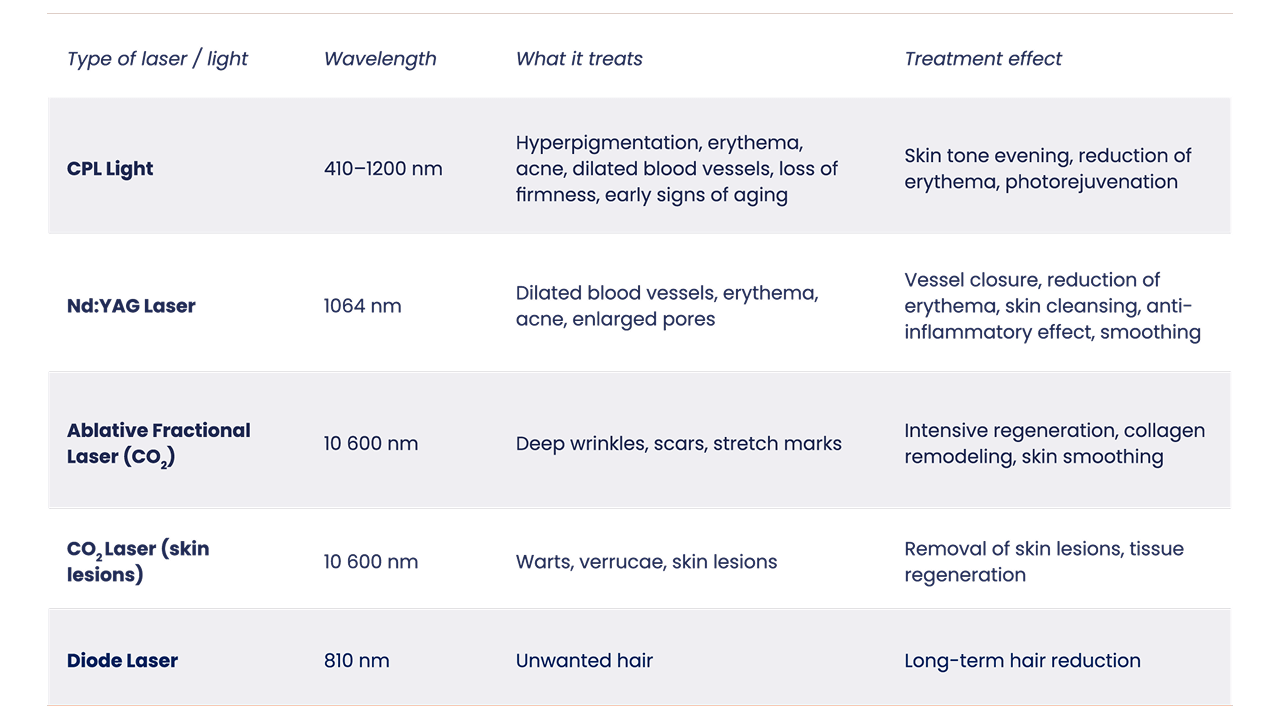
CPL technology uses broad-spectrum pulsed light of various wavelengths, which ensures high precision of action and a wide range of applications in cosmetological treatments. Thanks to the possibility of using appropriate filters, this technology allows for selective targeting of specific skin concerns. The CPL wavelength range extends from approximately 410 to 1200 nm, enabling individual adjustment of treatment parameters to the skin type and the nature of the indications, thereby increasing both effectiveness and safety.
CPL light acts on two main layers of the skin—the epidermis and the dermis. In the epidermis, which is the outermost layer of the skin, light energy is absorbed by melanin, the pigment responsible for skin color. This leads to its breakdown and gradual elimination, resulting in the reduction of hyperpigmentation and an improvement in overall skin tone. In the dermis, CPL light targets hemoglobin present in blood vessels, which contributes to the reduction of erythema and visible dilated blood vessels (so-called “spider veins”).
Additionally, CPL technology stimulates fibroblasts to increased activity, supporting the skin’s natural regenerative processes, including the synthesis of collagen and elastin. The result is an improvement in skin firmness, elasticity, and structure, visible after a series of treatments (photorejuvenation). CPL light is also used in the treatment of acne vulgaris and rosacea, reducing inflammation, decreasing erythema, and limiting the number of skin lesions.
The Nd:YAG laser emits light with a wavelength of 1064 nm, which allows for deep penetration of the skin. It operates on the principle of selective photothermolysis, converting light energy into heat. The laser light is absorbed by hemoglobin in blood vessels, leading to their contraction and closure, while also supporting skin regeneration. Thanks to this property, the laser acts at various depths of the skin, offering a wide range of therapeutic results. Additionally, by stimulating collagen production in the deeper layers of the skin, the laser improves firmness and elasticity, making the skin appear younger and more toned.
Main effects and applications of the Nd:YAG laser:
Closure of blood vessels and spider veins
The Nd:YAG laser effectively targets dilated blood vessels, spider veins, and other vascular lesions, causing them to constrict and fade. It is a safe and effective method, which is why it is among the most commonly used therapies in the treatment of vascular changes.
Rejuvenating treatments
By stimulating collagen production, the Nd:YAG laser contributes to a more youthful appearance of the skin. The treatment supports the reduction of wrinkles and improves skin tension and firmness, making the skin smoother and more elastic. To maintain the results, treatments should be performed regularly.
Carbon peel
In the carbon peel procedure, the Nd:YAG laser acts on a layer of carbon applied to the skin, which absorbs the laser light energy. The result is deep cleansing of the skin, improvement in its appearance, and smoothing of the surface. The treatment also exhibits anti-inflammatory effects, which is why it is used in individuals with problematic skin.
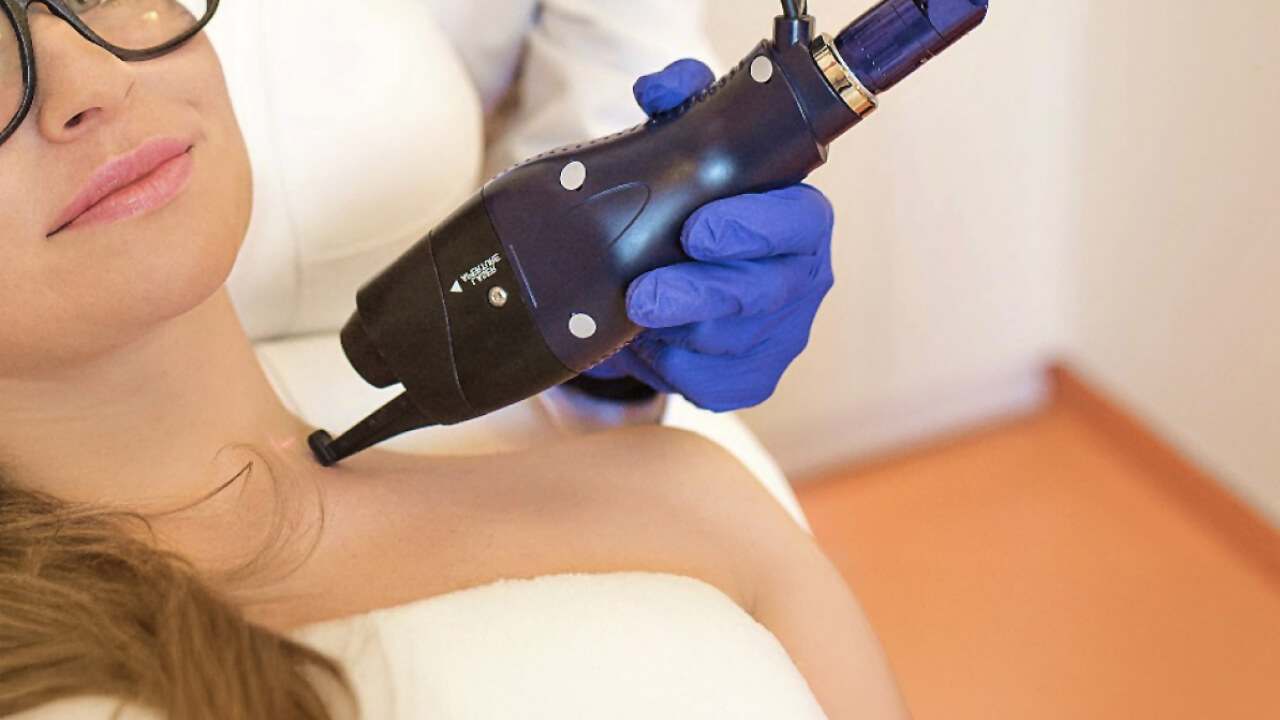
The fractional CO₂ laser is one of the most effective technologies used in aesthetic medicine. It emits light with a wavelength of 10,600 nm, which is strongly absorbed by water present in the tissues, enabling action on the deeper layers of the skin. During the procedure, the laser heats the skin point by point and vaporizes water from the cells, creating small, controlled micro-injuries. This mechanism stimulates natural regenerative processes and collagen remodeling. As a result, the CO₂ laser is used in scar reduction as well as in deep skin resurfacing treatments.
Main effects and applications of the CO₂ laser:
Skin rejuvenation
The CO₂ laser stimulates the production of collagen and elastin, making the skin firmer, more elastic, and smoother.
Removal of warts and skin lesions
The CO₂ laser effectively removes warts, verrucae, and other skin lesions that require a more advanced approach than traditional methods.
Removal of scars and stretch marks
CO₂ laser treatment reduces the visibility of scars and stretch marks, smooths the skin surface, and evens out its structure, supporting regenerative processes and improving the overall appearance of the skin.
The diode laser is one of the most commonly used lasers in aesthetic medicine, particularly in hair removal treatments. It operates at a wavelength of 810 nm, which makes it exceptionally effective in the removal of dark hair.
Its principle of action is based on selective photothermolysis, involving the absorption of light energy by dark elements of the skin, such as hair. The laser energy is converted into heat, which damages the hair follicles and inhibits their further growth. Because the laser light primarily targets melanin, the best results are achieved when removing darker hair on lighter skin.
The selection of an appropriate laser for a procedure should always be preceded by a consultation with a specialist who, by analyzing the patient’s skin condition and the nature of the problem, will choose the most suitable therapeutic method. It is essential that the treatment be tailored to individual needs, taking into account, among other factors, skin type, the type of concern, and the expected results. Precise selection of laser technology allows effective outcomes to be achieved with minimal risk of complications.
At the INVICTA Anti-Aging Clinic, the qualification process for laser treatments is based on thorough diagnostics and the experience of a team of specialists. Therapies are planned with a strong emphasis on safety and the predictability of results, grounded in current medical knowledge and proven protocols. Each treatment plan is discussed individually with the patient, so that the goals of the visit are clearly defined and realistically achievable.

Poczytaj więcej