Peeling for hyperpigmentation

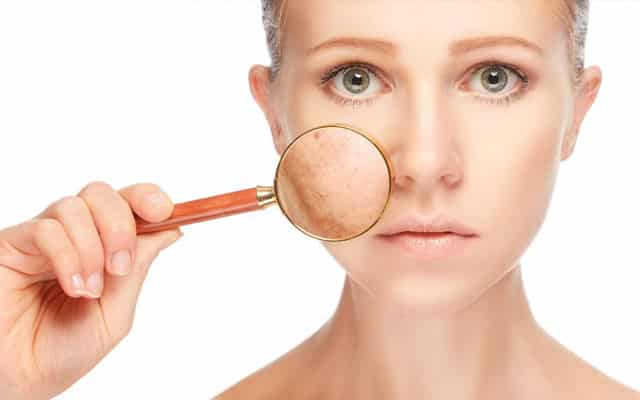
A chemical peel for hyperpigmentation is a treatment designed specifically to reduce discoloration. It is one of the most commonly used methods for getting rid of unwanted spots. The treatment reduces the amount of pigment (melanin) in the skin, limits its activity, and inhibits areas of overproduction, effectively evening out the skin tone and brightening it. It is a powerful peel for hyperpigmentation that also intensely regenerates the complexion. As a result, the condition and appearance of the skin improve.
A brightening peel for hyperpigmentation is based on strong active ingredients that effectively reduce sun-related, hormonal, and post-inflammatory discoloration. An additional benefit of the treatment is stimulation of cell renewal, smoothing of the skin’s texture, and giving it a healthy glow. To achieve the best possible results, a series of treatments is recommended.

The treatment is available in three variants: basic, standard, and premium. The price depends on the amount of product applied in layers during the procedure. A specialist will select the appropriate dose based on the reported issue and the expected results.

Price per treatment
0,00 PLN

Perceptibility

Brak bólu
Silny ból

Duration

60 min.

Recovery time

7 days

Number of treatments in a series

2-4

How to prepare

  • Before the treatment, avoid using products that irritate or exfoliate the skin, such as retinol or acids.

Is this tight for you?

A chemical peel for hyperpigmentation is a treatment recommended for patients struggling with uneven skin tone, melasma, and other discoloration of various origins.

Treatment process

STEP I: Makeup removal.

STEP II: Acid application.

STEP III: Application of a soothing mask.

Results

Effects provided by a chemical peel for hyperpigmentation:

• brightening of the skin and reduction of discoloration;
• evening out the skin tone;
• smoothing and improvement of texture;
• refreshing the complexion and giving it a more radiant appearance;
• skin rejuvenation.

The results depend, among other things, on the number of treatments and the patient’s individual skin characteristics.

Post-Treatment Care

After a chemical peel for hyperpigmentation:

• for 24 hours, do not wash your face or wear makeup;
• for 5–7 days, do not use scrubs, acids, retinoids, or irritating cosmetics;
• use only gentle, regenerating products recommended by the specialist;
• intensely moisturize your skin at least 2–3 times a day;
• after the treatment, peeling, a tight feeling, or mild redness may occur—remember this is a natural reaction and do not pick at the flaking skin;
• avoid sun exposure and tanning beds for at least 4 weeks;
• use a high-protection SPF 50+ cream daily and reapply it every 2–3 hours;
• for 7 days, avoid the sauna, swimming pool, intense physical activity, and hot baths;
• until your skin has fully regenerated, do not undergo other cosmetology treatments.

Contraindications

Contraindications to the procedure include:

• pregnancy and breastfeeding;
• active inflammation or skin infections;
• cold sores, wounds, or irritation in the treatment area;
• skin conditions in an exacerbation phase;
• allergy to the product’s ingredients;
• a recent tan or use of a tanning bed;
• use of strong dermatological medications (e.g., isotretinoin);
• inability to use SPF 50+ sun protection after the procedure.

I want to get rid of unwanted hyperpigmentation.

Book an effective treatment at the Anti-Aging INVICTA Clinic.

Meet Our Expert

quote

Hyperpigmentation is one of the most challenging skin concerns, often resistant to cosmetic products. A chemical peel works in the deeper layers of the skin, effectively lightening pigment spots and evening out the tone, restoring the skin’s smoothness and healthy glow.

Karolina Linowska,
Cosmetologist

We’re answering your most frequently asked questions

  • Carefully selected acids cause controlled exfoliation of the skin, which improves its overall condition, but most importantly actively helps lighten areas where too much pigment has accumulated.

  • No, one of the advantages of a peel for hyperpigmentation is that it works not only on the skin’s surface, but also in its deeper layers, stimulating natural regenerative processes in the epidermis.

  • A chemical peel treatment is usually not painful, but it may cause some discomfort. Its intensity depends, among other things, on the individual sensitivity of the patient’s skin.

  • Noticeable results are visible right away, but to enjoy the full effect, a series of treatments is usually needed. The skin’s condition improves gradually, and the full results are visible no later than after about 4 weeks.

  • Hyperpigmentation can worsen if the peel was chosen incorrectly, the treatment was too strong, and the patient’s skin turned out to be exceptionally sensitive. Hyperpigmentation may also be intensified by improper post-treatment care. It is important to consult an experienced specialist who will select the right peel for the type and severity of the discoloration.

  • Hyperpigmentation can come back, especially if after the treatment the patient does not take proper care to protect the skin, particularly from the sun. You should use high-SPF sunscreen, avoid intense tanning, and follow the specialist’s recommendations.

  • A chemical peel for hyperpigmentation in summer involves some risk, mainly due to intense sun exposure. After the treatment, the skin is more sensitive and more prone to irritation and new discoloration. Therefore, a peel can be performed in summer, but only with a specialist’s approval and under conditions that allow protection from UV rays.

  • Yes, at the Anti-Aging INVICTA Clinic, we focus on an individual approach to each patient. We select treatments (their type, number, strength, and the products used) based on over a decade of experience working with various skin concerns. We take into account, among other things, the type and severity of hyperpigmentation, the patient’s skin characteristics, and their expectations for the treatment. We put safety above everything else.

Other treatments:

Read more

Contact us