-
INVICTA Group Services
chevron_left Backclose
INVICTA Group Services
- INVICTA Group
- INVICTA Clinics
- Medical Laboratories
- Fertility Bank
-
Anti-Aging Clinic
- R&D Centre
- Nami
Publish date: 24 June 2025
Read in: 10 min

A future mother’s body undergoes numerous changes, most of which naturally regulate themselves within a few months after giving birth. However, some of the processes taking place during pregnancy may leave behind unwanted consequences. One such “souvenir” can be post-pregnancy pigmentation.
What causes these dark spots to appear? How can they be treated at home, and when is it worth seeking help from an aesthetic medicine clinic? Is it possible to prevent pigmentation during pregnancy – and if so, how?
The main cause of changes in a pregnant woman’s body is hormonal imbalance. During pregnancy, estrogen levels increase significantly, which in turn stimulates the activity of melanocytes – the cells responsible for producing melanin, the skin’s natural pigment. As a result, areas of the body exposed to sunlight (most often the face) become more prone to pigment changes, also known as hyperpigmentation. In this context, the most common form seen in pregnant women is melasma – a symmetrical accumulation of pigment on both sides of the face, particularly around the mouth, on the chin, forehead, and temples.
The good news is that melasma often fades on its own within several weeks after childbirth. Unfortunately, in women who are more prone to this type of aesthetic concern, these pigment changes may persist for much longer after pregnancy.
It’s important to note that not all post-pregnancy pigmentation looks the same. Some dark spots are scattered – like freckles – while others form larger patches due to a concentration of highly reactive melanocytes in a specific area. These spots can also vary in color intensity and in how deep they are located within the skin layers. That means some discoloration is easier to treat and will respond faster to brightening methods, while deeper and darker spots may require professional aesthetic treatments.
Most importantly, pigmentation treatments should only begin after childbirth and once breastfeeding has ended. That’s because many of the active ingredients used to treat discoloration could potentially affect the baby’s development.
Post-pregnancy pigmentation, especially when pronounced, often requires targeted care from new mothers looking to improve their skin tone. In many cases, the first attempts to lighten dark spots are made at home using over-the-counter skincare products. However, before applying any active ingredients, it’s worth consulting a dermatologist to assess the severity of the pigmentation and rule out any contraindications.
One of the most popular ingredients used in at-home care for surface-level pigmentation is retinol – a pure form of vitamin A. So, how can you safely and effectively reduce pigmentation after pregnancy at home?
Use creams and serums with appropriate concentrations of retinol
If the pigmentation is superficial and not too extensive, it may be beneficial to include creams or serums with vitamin A in your skincare routine, along with mild acids such as azelaic, kojic, lactic, or glycolic acid. These ingredients help exfoliate and regenerate the skin. When using vitamin A products, consistency and patience are key – but with time, the skin becomes less reactive to sunlight, as these formulations inhibit melanocyte activity. It’s crucial to use high-level sun protection while using acids or retinol to prevent further pigmentation.
Apply brightening face masks
Mild pigmentation can also be reduced by regularly applying masks made with natural ingredients like lemon, turmeric, or chamomile. These masks complement your vitamin A-based skincare while supporting overall skin health through antioxidants that neutralize free radicals. DIY mask recipes are widely available online, but you can also choose ready-made options from pharmacy or drugstore brands.
Exfoliate with brightening peels
Carefully selected peels can be a helpful addition to your skincare routine. Enzyme peels with brightening agents are particularly recommended. Not only do they remove dead skin cells, but they also enhance the absorption and effectiveness of creams, serums, and masks.
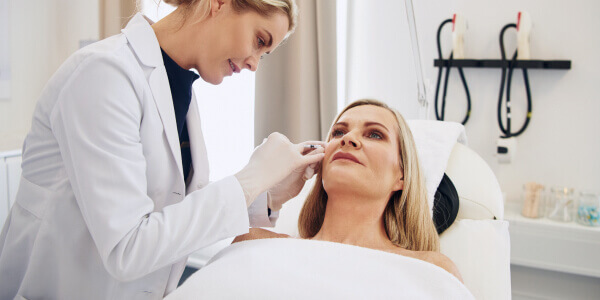
Depending on individual skin predispositions, some women may continue to struggle with post-pregnancy pigmentation for many years after giving birth. In certain cases, pigment changes are located in the deeper layers of the skin, and the discoloration may be extensive, forming large, uneven patches on the face or body. When that happens, over-the-counter brightening creams or home remedies may prove ineffective or offer only minimal improvement. In such situations, it’s worth seeking professional support at an aesthetic medicine clinic. It’s also important to remember that the sooner professional treatments are started, the better the chances of achieving faster and more visible results. Of course, any procedures should only be performed after childbirth and once the postpartum recovery period is complete. The first step toward improving skin tone and developing a personalized treatment plan is always a consultation with a qualified aesthetic medicine doctor.
Professional treatments are not only for patients with widespread pigmentation issues. Sometimes, even small but deeply rooted pigment changes require targeted, specialized solutions. One such option is a medical-grade chemical peel for localized discoloration, such as the Melanoplus treatment. This advanced procedure focuses on intensive chemical brightening of pigment spots. It is specifically designed for skin affected by hyperpigmentation, sun damage, and uneven tone. The treatment can be applied to various areas of the body, though it is most commonly performed on the face, neck, and décolletage. Importantly, the procedure is painless, and visible results often appear after the second application. Following treatment, mild redness and skin peeling are common and usually resolve within 14 to 28 days. During this time, it is essential to apply a high-level sunscreen to protect the skin and support the healing process.
Currently, the most effective and therefore most popular professional method for removing pigmentation is depigmentation therapy.
This treatment offers multi-level action: it not only reduces sunspots, freckles, and melasma, but also brightens the complexion and smooths fine lines. The formula used during the procedure contains ingredients designed to inhibit the activity of tyrosinase – the enzyme responsible for melanin production. It also includes vitamins A and C, which help reduce oxidative stress, along with kojic and azelaic acids, which work by transforming dark pigment into lighter tones. The treatment is painless, and the first visible effects typically appear within 30 days of the procedure. It consists of two stages: the first includes an in-clinic consultation and application of a specially formulated depigmenting mask, while the second stage continues at home with the use of a prescribed cream to maintain and enhance the results.
Laser pigmentation removal remains a highly popular and effective, though slightly more invasive, method of treating skin discoloration.
Specialists often recommend laser therapy for the treatment of melasma, sun-induced pigmentation, and age spots. The laser targets the pigment, causing the discoloration to temporarily darken before gradually flaking off as part of the skin’s natural exfoliation process. The full results of the laser treatment typically become visible around 30 days after the procedure.
It’s worth consulting a dermatologist at the very beginning of your journey to treat post-pregnancy pigmentation. Only a specialist can accurately assess the severity and depth of pigment changes in the skin and determine whether over-the-counter methods will be sufficient or if professional aesthetic treatments are needed.
Professional treatments are especially recommended when pigmentation is advanced or when home remedies and skincare have failed to produce results over time. However, aesthetic medicine is also a great solution for individuals dealing with mild discoloration who simply want fast and effective results.
Prevention plays a key role in reducing the need for future pigmentation treatments after pregnancy. It’s important for expectant mothers to understand their skin type and its susceptibility to discoloration. They should also be aware that hormonal changes during pregnancy can significantly alter the skin’s usual behavior, potentially increasing the risk of pigmentation—even in women who never experienced it before. Avoiding direct sun exposure and, most importantly, using a high SPF sunscreen should become a daily skincare habit throughout pregnancy. While these steps cannot guarantee complete prevention, they significantly reduce the likelihood of developing deep and difficult-to-treat pigment changes after childbirth.

Read more