-
INVICTA Group Services
chevron_left Backclose
INVICTA Group Services
- INVICTA Group
- INVICTA Clinics
- Medical Laboratories
- Fertility Bank
-
Anti-Aging Clinic
- R&D Centre
- Nami
Update date: 28 May 2025
Publish date: 26 May 2025
Read in: 9 min

The labia enhancement procedure using hyaluronic acid is growing in popularity. What’s behind its appeal?
This minimally invasive treatment offers a quick improvement in the appearance of intimate areas without the need for surgical intervention. Correcting the shape or size of the labia can significantly enhance comfort in everyday activities, such as engaging in sports or even wearing lace lingerie. Painful irritation in the intimate area becomes a thing of the past! Many patients also report improvements in other aspects of life, including enhanced sexual satisfaction.
So what exactly does this aesthetic gynecology procedure involve?
In short, a qualified specialist injects a hyaluronic acid-based filler directly into the labia (or surrounding areas, such as the vaginal vestibule).
But before we go into more detail about the treatment itself, let’s quickly review some important facts about female anatomy.
Table of Contents
The anatomy of a woman’s external intimate area includes the labia minora and labia majora. In their typical arrangement, the labia majora fully (or almost fully) cover the labia minora. However, due to anatomical variations — most often congenital — the labia minora may sometimes protrude beyond the labia majora.
The outer labia (labia majora) are composed of a significant amount of fatty tissue covered by skin containing hair follicles. The labia minora, on the other hand, consist of delicate tissue covered by a thin epithelial layer. Healthy tissue typically appears pink in color; however, when the labia minora are not completely covered by the labia majora, the exposed epithelial tissue often darkens over time.
In young women, the labia majora usually lie closely together and are characterized by high elasticity and firmness.
However, due to the properties of the subcutaneous tissue — made up of fat cells and glands — the original firmness of the labia majora tends to decrease over time, leading to a gradual decline in their aesthetic appearance.

The loss of elasticity in the tissues that make up the labia majora is a natural part of the aging process. This can lead to a decrease in their firmness, volume, and shape, as well as unsightly sagging.
The structure of the labia majora can also be damaged due to various factors. These include mechanical injuries, postoperative complications, as well as the effects of childbirth and severe, chronic intimate diseases or infections.
Some women, due to genetic factors or hormonal changes during the postmenopausal period, may also experience significant reduction or even complete loss of the labia majora, known as atrophy.
The consequences of improper size or structure of the labia majora can be serious and may pose a threat to the patient’s intimate health. In some cases, sagging, overly large, or too small labia majora represent a purely aesthetic issue, but one that significantly impacts a woman’s self-esteem and lowers her satisfaction with her sexual life. Functionally, it may also affect the ability to fully experience pleasure. In other cases, dissatisfaction with the appearance of the labia majora is accompanied by health concerns. These primarily include:
irritation and injuries of the labia minora
recurring intimate infections
frequent inflammation and discharge
pain and discomfort during daily activities
contact dermatitis of the skin and mucous membranes due to irritating factors
dermatological conditions
psychological issues
One of the ways to address the various consequences of undesirable size, shape, or structure of the labia majora, or simply to correct their aesthetic appearance, is labia enhancement with a cross-linked hyaluronic acid filler. During the procedure, the filler can also be applied to the surrounding structures, which helps expand the range of expected results for the intimate area.
Cross-linked hyaluronic acid is one of the most commonly used fillers in aesthetic gynecology. It has moisturizing properties for the skin and mucous membranes, and it also stimulates tissue to increase collagen production. As a result, hyaluronic acid strengthens the skin’s structure, helping to alleviate anatomical changes and enhance the tension in the intimate area. The patient benefits from a reduction in discomfort or pain, and noticeable rejuvenation of the labia majora occurs.
Labia enhancement with hyaluronic acid is always preceded by a gynecological consultation and qualification for the procedure, which is included in the price of the treatment at the Anti-Aging Clinic. The patient is also required to provide a cytology test result, which must have been conducted no earlier than six months prior to the scheduled treatment.
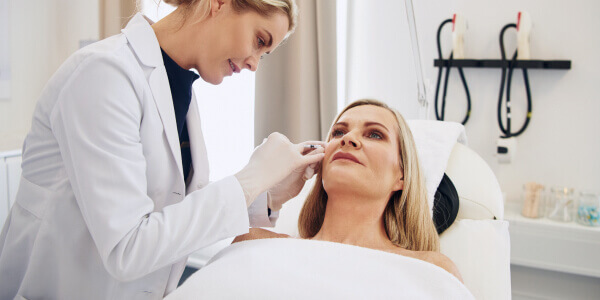
The hyaluronic acid application in the labia majora and/or surrounding areas is a medical procedure performed under local anesthesia, which further increases the patient’s comfort. After determining the scope of the procedure, the doctor injects the hyaluronic acid filler into the pre-selected areas using a syringe with a needle or cannula.
The procedure typically lasts between 30 to 45 minutes, depending on the treated area and individual characteristics. After the procedure, the patient can return home immediately. However, it is important to note that the full recovery time for the treated areas is usually around 2 weeks, during which it is recommended to avoid bathing in a tub. Initially, there may be slight discomfort in the form of mild pain at the injection site, but this is temporary.
Treatments using hyaluronic acid-based fillers are often characterized by immediate visible results after the first session. This is also the case with labia enhancement using hyaluronic acid. The shaping, sizing, and volumizing of the labia are noticeable right away, although slight swelling, redness, or bruising may persist at the injection sites for a short time. The final results of labia filling with hyaluronic acid depend on the condition and thickness of the skin and subcutaneous tissue at the injection sites. Individual characteristics of the patient and her overall health also play a role.
Hyaluronic acid is also used to enhance skin hydration and stimulate collagen production. Therefore, depending on the issue being addressed with labia enhancement, patients can expect improved firmness, elasticity, and increased tissue volume in the treated areas. The skin gains higher hydration levels, and in the long term, it undergoes remodeling due to the increased production of collagen fibers. For patients experiencing atrophy, the labia will better protect the delicate underlying structures after the procedure, as their size and volume will be corrected. Women who were dissatisfied with the aesthetic appearance of their labia majora can expect a significant improvement in this regard.
Labia enhancement with denser hyaluronic acid allows patients to enjoy the results for approximately two years, depending on their individual characteristics. After this time, the procedure should be repeated. Overcoming self-esteem issues, improving sexual life, and significantly reducing the frequency of recurring infections, inflammations, and associated pain are certainly worth the investment in the treatment, which simultaneously becomes an investment in one’s self-esteem and health.

Read more