-
INVICTA Group Services
chevron_left Backclose
INVICTA Group Services
- INVICTA Group
- INVICTA Clinics
- Medical Laboratories
- Fertility Bank
-
Anti-Aging Clinic
- R&D Centre
- Nami
Update date: 6 March 2026
Publish date: 26 May 2025
Read in: 10 min

Skin changes on the face and neck are difficult to hide. While they may sometimes be only an aesthetic concern, they can also signal an underlying condition that requires treatment. What types of skin lesions can appear on the face, and what causes them? Most importantly—how can they be treated?
Table of Contents
The term skin lesions can refer to virtually any abnormal structure that disrupts the natural tone or surface of the epidermis. Their causes are just as varied and may stem from external factors (such as sun-induced pigmentation) or internal ones. In the latter case, skin symptoms may indicate that the body is not functioning properly.
Some skin changes on the face and neck may also be genetically determined, while others are acquired. Identifying the underlying cause of such dermatoses (skin conditions) is crucial for planning effective treatment.
The most common causes of pathological skin changes include:
The location of a lesion often depends on its cause. Some changes most commonly appear on the hands, torso, or scalp, while others frequently affect the face and neck. The latter are often particularly troubling for patients, not only due to their aesthetic impact but also because they can lead to psychological distress.
For this reason, it is essential to correctly diagnose the underlying cause of facial skin lesions and implement an appropriate treatment plan, whether through dermatological therapy or procedures available in aesthetic medicine.
The most common skin lesions found on the face and neck include warts, discolorations and moles, as well as fibromas. It is worth taking a closer look at these dermatoses to better understand how they develop, learn to correctly identify their appearance, and recognize when a lesion is merely an aesthetic concern and when it may pose a health risk.
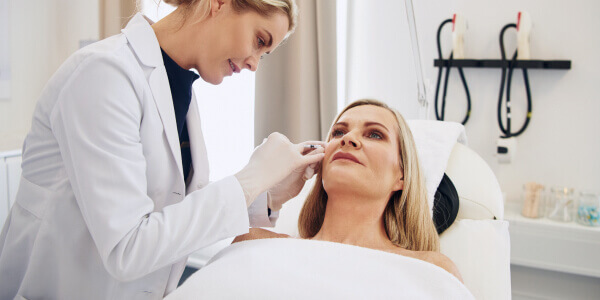
Regardless of the type of dermatosis, any decision about removal should always be made in consultation with a dermatologist or an aesthetic medicine physician (if the lesion can be treated with methods available in this field).
The main types of skin lesions affecting the face and neck include:
Warts are essentially caused by infection with the human papillomavirus (HPV). There are, however, numerous subtypes of warts that can develop in different parts of the body. They usually appear as firm nodules with a rough surface, typically skin-colored or slightly darker.
Facial warts are among the most common skin concerns brought to dermatologists. Patients often inquire about removal, as these lesions are bothersome mainly for aesthetic reasons. In treating facial warts, one of the key considerations is ensuring that removal does not leave visible scarring.
Discolorations most often develop as a result of hormonal imbalances. They may also be triggered by sun exposure or pregnancy. While typical pigmentary changes usually pose no health risk, they often affect a patient’s self-esteem. For this reason, once the underlying cause has been identified and an aesthetic medicine consultation completed, patients often choose to have them removed.
When it comes to moles appearing on the face and neck, proper diagnostic evaluation to rule out malignancy is crucial. If the assessment confirms that the lesions are harmless, they too may be safely reduced or removed.
Fibromas are benign connective tissue tumors, most often genetically determined. They usually develop in areas prone to friction and appear as soft (less commonly firm) growths. Most fibromas are skin-colored or slightly darker.
From a medical standpoint, fibromas generally do not require removal. However, since they can sometimes be an embarrassing aesthetic concern, there is no reason not to consider their removal. In such cases, treatment can be planned in consultation with a physician.
Unfortunately, a face cream for hyperpigmentation does not always help. Home remedies for removing facial discoloration are effective only for superficial skin changes. They will not eliminate melasma, and in the case of deeper spots, they may at best lighten them. For this reason, it is always best to start addressing the problem with a consultation with a specialist.
Proper protection during sun exposure—meaning the use of high SPF filters is the absolute foundation of daily skincare for skin prone to developing unsightly discoloration.
Cosmetics for facial hyperpigmentation that can be used at home include various ointments, serums, and masks containing in particular:
• vitamin C,
• niacinamide,
• azelaic acid,
• arbutin,
• kojic acid,
• licorice extract,
• tranexamic acid,
• retinoids,
• AHA acids (lactic acid, mandelic acid),
• PHA acids – for sensitive skin,
• enzymes (papain, bromelain),
• honey,
• aloe,
• chamomile,
• green tea.
If, despite your efforts, home remedies for hyperpigmentation do not produce results, it is worth considering safe and proven solutions offered by laser therapy and cosmetology.
Skin lesions on the face and neck are most often perceived by patients as a troublesome aesthetic problem. They can lower self-esteem and, in some cases, even lead to social exclusion. The first and most natural reaction of many people struggling with such changes is to attempt self-removal using home remedies.
Unfortunately, some dermatoses tend to recur, meaning that even after removal there is no guarantee they will not reappear.
Depending on the type and nature of the lesion, the most commonly used treatment methods include:
Creams and ointments are most commonly used in the treatment of skin discolorations. They often contain ingredients such as retinol, vitamin C, lactic acid, or azelaic acid, which work by reducing the epidermis affected by the lesion. Creams and ointments are also used in the treatment of warts, though in this case it is important to pay attention to the active ingredients they contain.
Some topical preparations should not be applied to the face or neck, as they may damage healthy skin tissue surrounding the lesion targeted for removal. Today, formulations based on antiviral agents are often used, as they can effectively eliminate warts without affecting the surrounding skin structure.
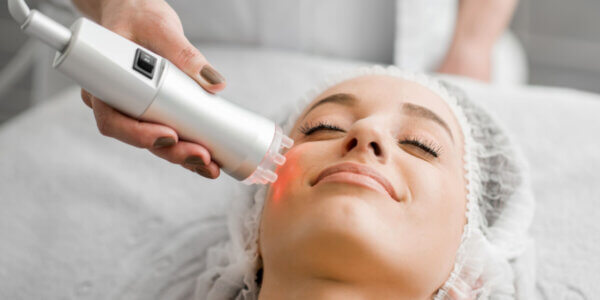
Laser removal of skin lesions is one of the most effective methods for treating warts, fibromas, benign moles, and other lesions on the face and neck. The procedure is performed by a dermatologist under local anesthesia, making it virtually painless. Another advantage is that it requires no recovery time, with the only recommendation being to avoid sun exposure afterward.
One of the greatest benefits of using a laser for precise removal of facial and neck lesions is the significantly reduced risk of scarring.

Electrocautery is a method used to remove warts and fibromas by exposing the lesions to high-frequency electrical current, which damages the proteins that form these growths. This technique allows for the effective removal of warts or fibromas without the risk of scarring or permanent discoloration.
Today, depending on the size of the lesion, electrocautery is most often performed under local anesthesia. However, patients should be aware that mild swelling, pain, bruising, or small wounds may occur, which can require a few days of recovery.
Cryotherapy is a method of removing warts and fibromas by freezing them with liquid nitrogen at a temperature of around -140°C. It is considered a safe procedure, even for pregnant women and children. The exact technique is tailored by the specialist to the size of the lesion. One of the main advantages of cryotherapy is the minimal risk of scarring after the removal of a wart or fibroma.
Surgical excision is also still used for removing skin lesions. However, it is not recommended for warts or fibromas located on the face, as it may leave unsightly scars or even keloids in patients prone to their formation.
In most cases, skin lesions on the face and neck are removed purely for aesthetic reasons. This means they usually do not pose any health risk, and a doctor may not see a strict medical indication for their removal.
However, the location of a lesion—for example, along the hairline or at the edge of a shirt collar—can sometimes lead to irritation. This often results in inflammation, in which case removal is fully justified.
Even when a lesion is bothersome only from an aesthetic perspective, it is still worth addressing. A consultation with a dermatologist will help determine the available treatment options. Improving self-esteem and overall quality of life is an important goal—just as valuable as maintaining physical health.

Read more