-
INVICTA Group Services
chevron_left Backclose
INVICTA Group Services
- INVICTA Group
- INVICTA Clinics
- Medical Laboratories
- Fertility Bank
-
Anti-Aging Clinic
- R&D Centre
- Nami
Update date: 6 March 2026
Publish date: 10 June 2025
Read in: 9 min
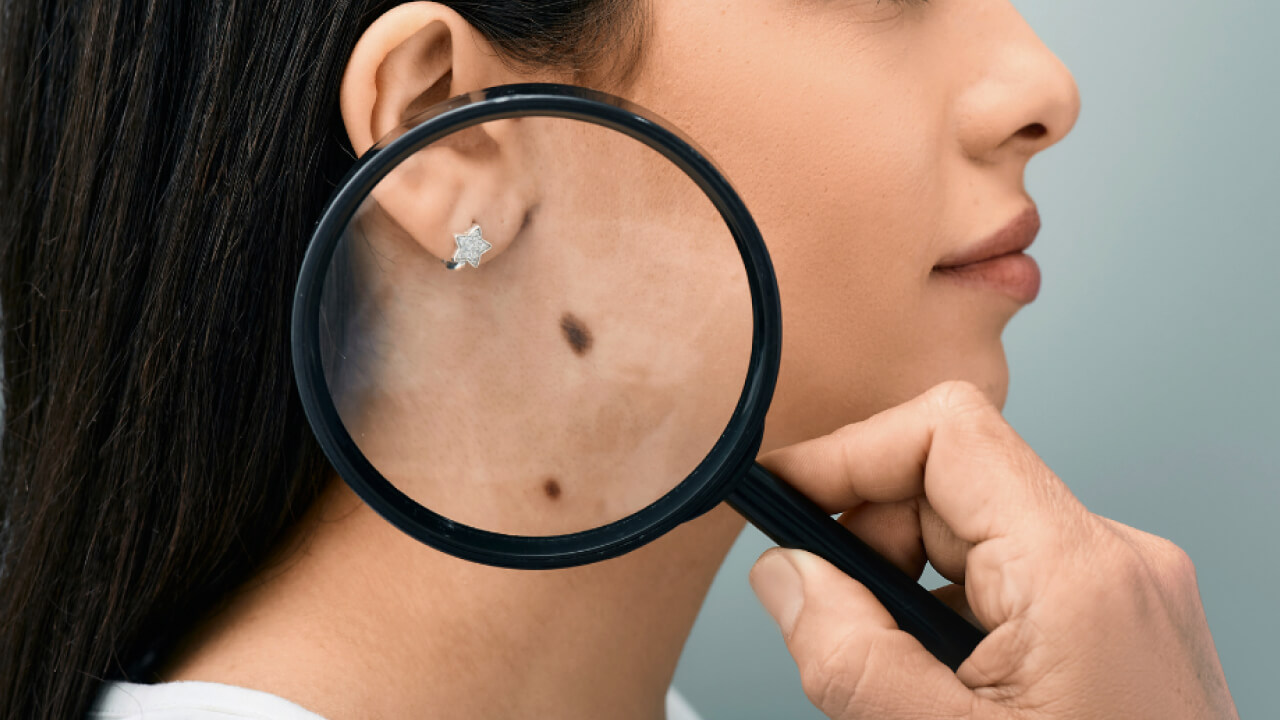
Facial discoloration does not always appear as charming freckles. Most often, these are unaesthetic and irregular spots that can make us look older and negatively affect our self-confidence. We explain what they are, how they develop, and most importantly — we present effective methods for removing facial discoloration.
Different types of pigmentation disorders can appear on the skin, and they do not affect only the face. Unwanted spots may occur on any part of the body. It is important to remember that any skin lesion that persists for a longer period of time should be consulted with a specialist, as it may indicate a cancerous condition or another serious systemic disease.
Table of Contents
Skin discolorations on the face, as well as on any other part of the body, occur as a result of abnormal activity of melanocytes — pigment cells that produce melanin in the process of melanogenesis. Melanin is primarily responsible for the color of our skin and hair, as well as the color of the irises of our eyes. It also protects the deeper layers of the skin from the harmful effects of ultraviolet (UV) radiation.
Sometimes too many melanocytes accumulate in certain areas of the skin, they become overly active, or they produce excessive amounts of pigment. The result is uneven skin tone. What causes the melanin production process to become disrupted and lead to unwanted pigmentation spots? There may be several reasons.
Skin darkening mainly develops in areas most frequently exposed to sunlight, as UV radiation stimulates melanocytes to work more intensively. For this reason, discoloration on the nose and other parts of the face, as well as on the hands, décolleté, forearms, arms, and calves, is most commonly observed.
In addition to sun-induced facial discoloration, other possible causes include:
hormonal changes,
certain medications,
inflammatory conditions, for example post-inflammatory discoloration that can appear in areas affected by acne;
photosensitizing substances found in certain herbs, medications, cosmetics, and perfumes;
intensive cosmetic treatments,
genetic predisposition.
The risk of unwanted skin changes increases with age. Various types of pigmentation spots affect about 35% of women after the age of 30 and as many as 90% after the age of 50.
In younger individuals, the appearance of hyperpigmentation is most often associated with hormonal fluctuations, for example during pregnancy or as a result of hormonal contraception. After the age of 45, hormonal discoloration on the face is usually related to menopause or hormone therapy.
The most common types of facial discoloration include:
Freckles – small skin changes (1–5 mm) closely related to genetic predisposition. They usually appear seasonally, when sun exposure is strongest. For some people freckles can be a natural beauty feature, while for others they may be considered an aesthetic concern.
Melasma (chloasma) – brown discolorations on the face that appear as symmetrical patches located in typical areas of the skin, such as the cheeks, forehead, temples, upper lip, and sometimes the neck.
Melasma primarily affects women of reproductive age — it is a well-known type of facial discoloration that occurs during pregnancy. The main factors contributing to its development are female hormones, genetic predisposition, and sunlight. Symptoms suggesting melasma should be consulted with a dermatologist.
Age spots – this type of pigmentation spot can reach up to 2 cm in diameter and appears as dark brown or black lesions. They may develop as a result of aging or due to exposure to UV radiation (in such cases they are reversible sun spots — one of the types of sun-induced facial discoloration).
Mild lesions can be removed with laser treatments. In some cases, however, an age spot may develop into melanoma, a malignant skin cancer, which is why such changes should never be ignored.
Post-acne facial discoloration – a common problem not only among teenagers but also adults. These changes appear on the skin as spots ranging in color from pink to light brown. The method of treatment should be tailored to the individual situation of the patient.
Unfortunately, a face cream for discoloration does not always work. Home remedies for removing facial discoloration are effective only for superficial skin changes. They will not eliminate conditions such as melasma, and in the case of deeper spots they may only lighten them. That is why it is always best to begin addressing this issue with a consultation with a specialist.
Proper protection during sun exposure — namely using high SPF filters — is an absolute foundation of daily skincare for skin prone to developing unwanted discoloration.
Cosmetics for facial discoloration that can be used at home include various ointments, serums, and masks containing in particular:
vitamin C,
niacinamide,
azelaic acid,
arbutin,
kojic acid,
licorice extract,
tranexamic acid,
retinoids,
AHA acids (lactic acid, mandelic acid),
PHA acids – for sensitive skin,
enzymes (papain, bromelain),
honey,
aloe,
chamomile,
green tea.
If home remedies for discoloration do not bring results despite your efforts, it is worth considering safe and proven solutions offered by laser therapy and cosmetology.
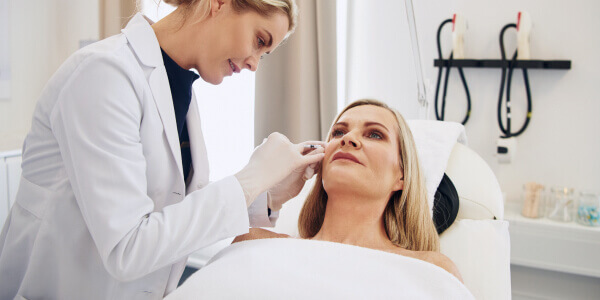
Before you start wondering which treatment for facial discoloration will work best in your case, consult a specialist. Only an experienced professional will be able to accurately determine the type of your skin concern and its level of advancement, and therefore select the most effective method for removing unwanted spots.
Below we present some of the most commonly used solutions.
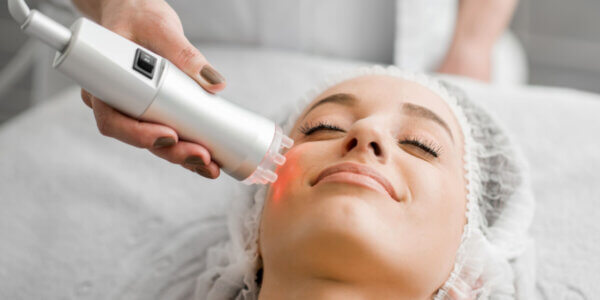
Laser removal of discoloration is characterized by high effectiveness. Laser beams correct pigmentation changes and give the skin a smooth, even tone. During the consultation, the doctor selects the appropriate device parameters to match the specific type of problem.
The procedure itself is not painful. Patients may only feel slight discomfort, such as gentle pinpricks or a sensation of increased warmth.
A series of medical peels targeting localized areas of hyperpigmentation not only removes unaesthetic spots but also helps reduce fine wrinkles and makes the skin firmer. Peels involve applying active substances to the skin that cause exfoliation and brightening.
A peel for discoloration is a chemical peel that intensely lightens pigmentation changes. The procedure is painless and may cause only a mild, non-bothersome tingling sensation. After the treatment, the skin must be properly cared for and strictly protected from UV radiation.
This is another option for people who want to restore an even skin tone. The Cosmelan treatment eliminates even the deepest pigmentation changes and, thanks to its melanin-regulating properties, also helps prevent the formation of new ones.
The procedure consists of two stages. First, the doctor applies a specialized preparation to the patient’s skin, and then the patient continues with home care according to strict guidelines. The treatment is painless, and the first effects can be visible after just a few days.

Read more