-
INVICTA Group Services
chevron_left Backclose
INVICTA Group Services
- INVICTA Group
- INVICTA Clinics
- Medical Laboratories
- Fertility Bank
-
Anti-Aging Clinic
- R&D Centre
- NAMI
Fact checked by: lek. Ewa Sokołowska
Update date: 27 July 2026
Publish date: 18 June 2025
Read in: 9 min
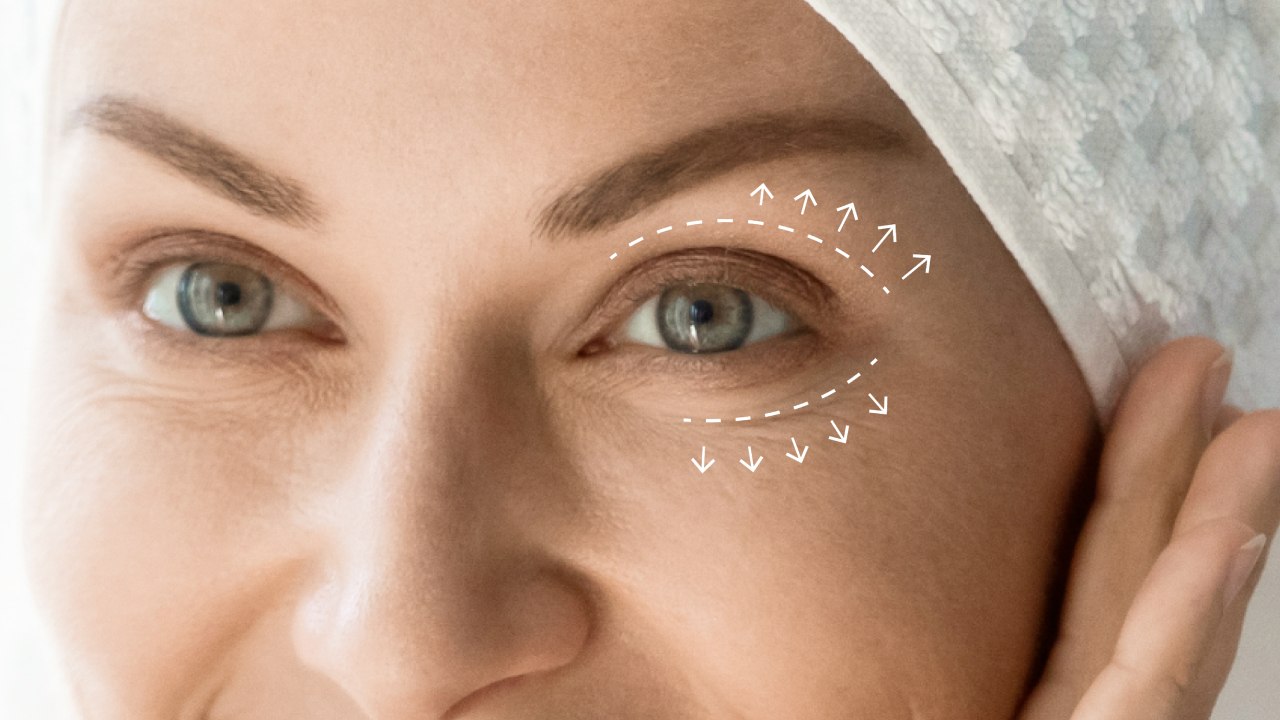
Blepharoplasty can be a solution when excess skin narrows the field of vision and drooping eyelids give the face a sad appearance. It is worth considering this procedure, especially since effective correction can be performed not only by a surgeon. Learn more about both surgical and non-surgical blepharoplasty and find out why a scalpel-free eyelid lift has become such a popular choice.
Eyelids may droop due to age. This problem often appears around the age of 40–50. It is caused, among other things, by natural skin ageing processes, during which the skin gradually loses its firmness. With age, the muscles and ligaments that support the eyelid also weaken. On the other hand, it can also be one of the potential symptoms of certain neurological disorders, including damage to the oculomotor nerve (III), Horner’s syndrome, or neuromuscular diseases such as myasthenia.
The problem most often affects both eyelids and, in extreme cases, can interfere with proper vision.
Drooping eyelids are also encouraged by:
Blepharoplasty is another name for surgical eyelid correction, one of the most commonly performed procedures in plastic surgery. It is a popular treatment because it not only significantly rejuvenates the eye area, but also improves the field of vision.
Surgical eyelid correction takes about 1 hour and is usually performed under local anaesthesia (the patient remains conscious but feels no pain). The surgeon makes an incision in the crease of the upper eyelid, removes excess fat tissue and redundant skin, and then closes the wound with fine sutures. The patient returns home on the same day. Swelling and bruising typically subside after about 7 days.
Depending on the patient’s needs, the procedure may focus on specific areas, which is why we distinguish:
Patients most often choose blepharoplasty when they are dealing with:
As a result, the face gains a more rested and noticeably younger appearance. Upper eyelid correction offers not only aesthetic benefits. Significant drooping of the eyelids can limit the field of vision, especially peripheral vision, making activities such as driving or reading more difficult. In such cases, surgical removal of excess skin from the upper eyelids becomes necessary.
A proven solution for concerns around the eyes.
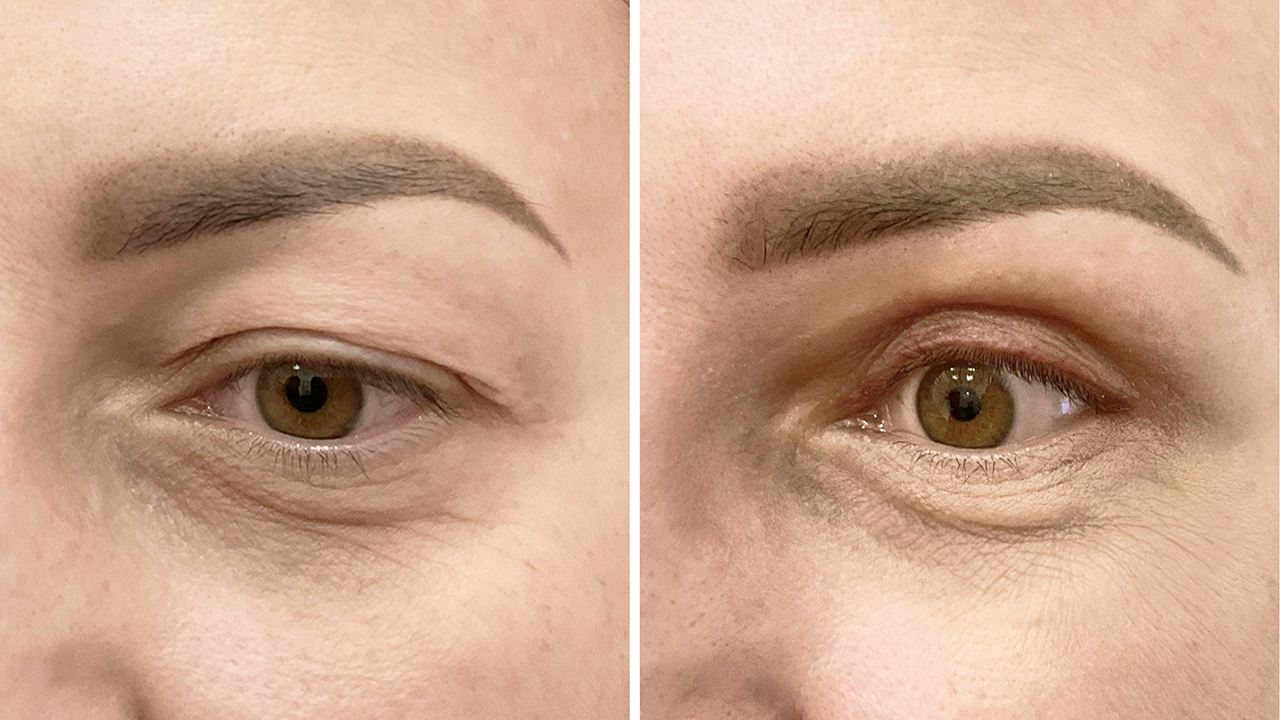
The photos show the result achieved in a specific patient. The outcome of the procedure may vary depending on factors such as the patient’s individual characteristics, anatomical variations, age, lifestyle, adherence to post-operative recommendations, and surgical techniques.
The cosmetic market has embraced an innovative device that allows patients who would otherwise qualify for surgery to undergo an eyelid lift without a scalpel.
It is a small, handheld medical device that generates a plasma beam. The Plasma IQ procedure performed with it creates controlled thermal micro-injuries in the skin, stimulating intense regenerative processes. The device is ideal for lifting even delicate areas of the skin, such as the eyelids and the eye area.
The plasma beam leaves tiny scabs on the skin, causing epidermal sublimation — that is, its evaporation — without damaging the basal layer of the dermis or surrounding tissues, and without bleeding. The skin around the treated points also contracts immediately, producing a tightening and lifting effect.
The entire procedure takes about 20 minutes, and the sublimation spots, with a diameter of less than 1 mm, remain visible for up to 10 days after the treatment.
Plasma blepharoplasty visibly rejuvenates the skin in a minimally invasive way. It allows you to achieve an effect similar to a minor surgical lift, but without cutting the skin or undergoing a traditional operation. An additional advantage of Plasma IQ is the exceptionally short recovery period. However, this method is not always a suitable alternative to a surgical procedure. It may not provide visible and satisfactory results for every patient.
Correction of the upper and lower eyelids is not the only possible application of plasma-based technology. It is also effective for other concerns related to skin laxity, as well as for reducing stretch marks and scars, and smoothing wrinkles around the eyes (such as crow’s feet), ears, and lips. The INVICTA Anti-Aging Clinic is one of the few centres in the Tri-City area offering this solution.
A single treatment in the eye area can deliver up to 30% of the planned result. For this reason, a series of 1 to 3 procedures is usually performed at intervals of 4–6 weeks.
Discover a minimally invasive treatment for drooping eyelids.
The recovery period usually does not last longer than 2 weeks, while swelling and redness — a natural and expected post-treatment response — typically subside within a few days.
In the case of upper eyelid correction, the swelling can sometimes be significant enough to prevent the patient from carrying out daily activities for 3–7 days after the procedure.
After about 4 days, the skin at the points of direct contact with the plasma beam begins to regenerate, and small scabs appear, lasting up to 14 days. The procedure can be repeated once the skin has fully healed, which takes approximately 6 to 8 weeks.
Immediately after the treatment, the skin must not be exposed to sunlight, and it is essential to follow all aftercare recommendations.


Read more